
Martin G. Lockley Discovery Center
HOME OF THE NEW DEEP TIME DETOUR EXHIBITION
New Prehistoric Exhibit
NOW OPEN 9 a.m. – 5 p.m.
Located at the Martin G. Lockley Discovery Center
(at Entrance 1 to Red Rocks Park & Amphitheatre)
Walk-ups are always welcome, but if you would like to guarantee an entry time or plan ahead for yourself or a group, we recommend buying tickets online for same-day or future visits.
Experience Colorado Wildlife Like You’ve Never Seen Before!
The all-new Deep Time Detour exhibition at the Martin G. Lockley Discovery Center introduces you to prehistoric wildlife that thrived in Colorado across 300 million years of changing geological landscapes.
Explore the science-informed artwork designed to immerse you in a sensory experience unlike anything on Earth today!
Visitors Are Already Raving About Deep Time Detour
A Perfect Balance of Science + Family Fun
Rarely do museums combine great scientific and technical quality with this level of family friendliness. This place really delivers! I’m a massive fossil nerd and like to get into gritty details of an exhibit, and I got to do that here. My two year old also had a blast! They really found the perfect balance.
The artistic renderings of the animals are astonishing. The space is really well planned. The science is top notch!
I will be coming back many times.
–Jacob J.
Immersive, Touchable Exhibits
Got to attend the new Deep Time Tour exhibition, really excellent new touchable sculptures that cover a wide range of time and provide beautiful reconstructions of the past life of the area!
–Meaghan W.
Located inside Red Rocks Entrance #1 off HWY-93
Situated on the west side of Dinosaur Ridge, the Martin G. Lockley Discovery Center is named in memory of world-renowned paleontologist Dr. Martin Lockley (1950–2023).
Dr. Lockley co-founded the nonprofit group Friends of Dinosaur Ridge in 1989 to protect and raise awareness about the fossil resources while advancing scientific research within the Morrison-Golden Fossil Areas National Natural Landmark. He was a scientist and educator who specialized in the study of trace fossils (ichnology) around the world.
Address & Contact Info
17681 W. Alameda Parkway, Golden, CO
Phone: 303-697-3466
Email: info@dinoridge.org
*Pricing for Deep Time Detour
- $10 Adults
- $8 Children (ages 3-12)
- Free for children ages 2 and under
- SNAP/EBT/WIC pricing available in person only
*also includes entry to Main Visitor Center exhibit hall
Easy Weekend Shuttle Access

Take the easy way to visit Deep Time Detour this summer
Take the free weekend Westracks shuttle from Golden, Morrison, and Red Rocks with convenient stops at the Martin G. Lockley Discovery Center every 15 minutes from 9 a.m. – 5 p.m. Memorial Day through Labor Day. From Denver, ride the W Line light rail to the Golden Station, and catch the shuttle from there!
WestTracks shuttle riders receive $2 off Deep Time Detour admission.
Onsite parking is available.
What to Expect
Find yourself face-to-face with life-like replicas of creatures that thrived in Colorado long before people were here. Scientifically accurate artistic exhibits from the fossil record will take you through six very different deep time periods in Colorado’s history.
Designed for all ages, you can touch the displays and experience what it was like to encounter wildlife once common to the region.
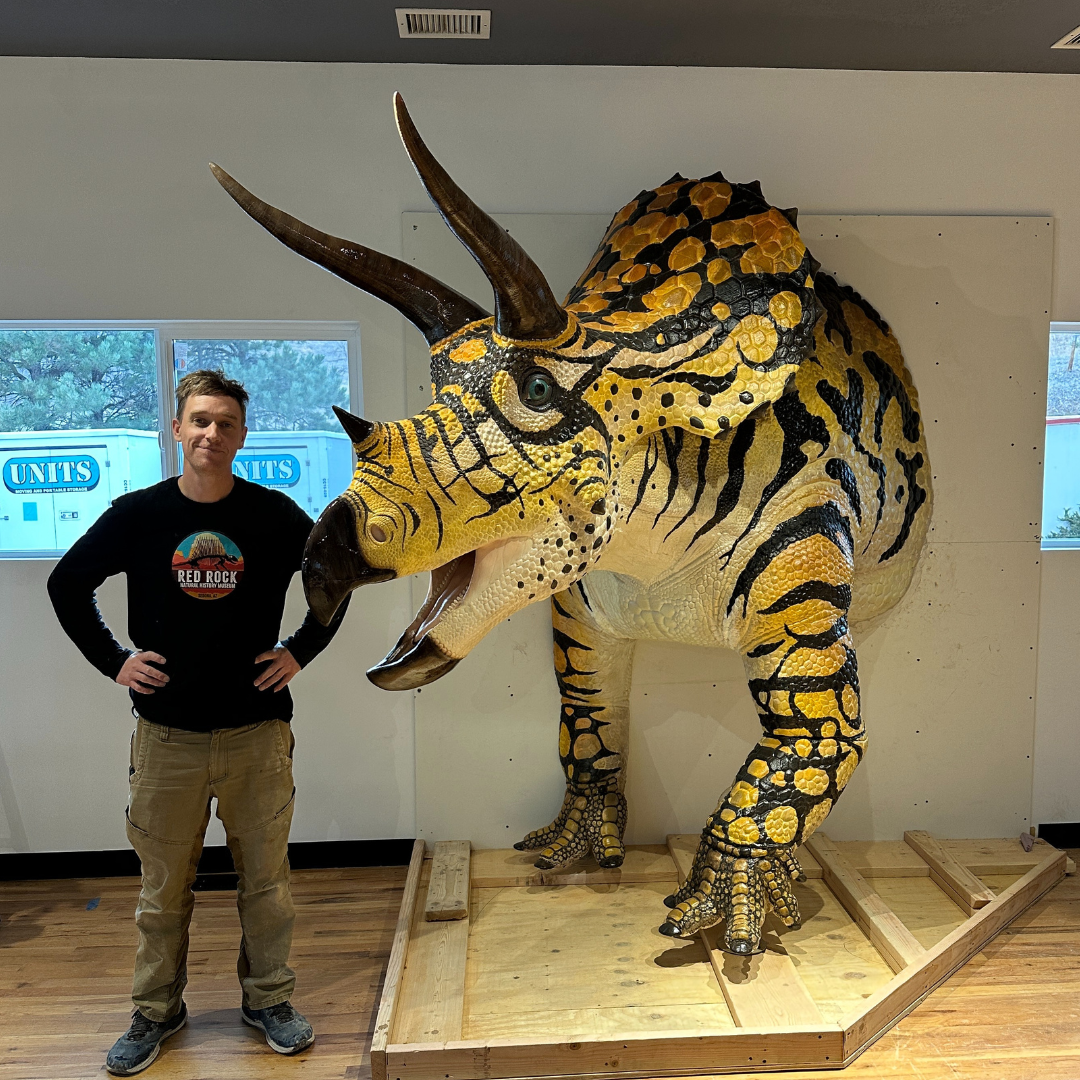
Sculptor Keegan Kuhn of TRX Dinosaurs (pictured on the right next to his Triceratops creation) designed, 3D printed, and hand painted original exhibits of Colorado prehistoric wildlife for the Deep Time Detour exhibition. Floor-to-ceiling wall murals complete the look of each geological time zone from 300 to 30 million years ago based on fossil findings and the latest scientific interpretation. LEARN MORE ABOUT KEEGAN KUHN AND TRX DINOSAURS!

Entrance
Enter the Martin G. Lockley Discovery Center and feel an immediate connection between the present and the distant past. A stylish mural of Colorado’s state fossil, the Stegosaurus, greets you from a scene from the Jurassic that might’ve been happening right on the other side of the wall.
An artfully designed donor acknowledgement wall celebrating the community that brought the Center’s exhibits to life will also serve as a means of bringing context to the surrounding geology. This immersive space invites you to pause, take in the beauty of the present, and get ready to take a Deep Time Detour through ancient landscapes where stunning plants and animals once lived.
ZONE 1: RED ROCKS
Red Rocks Park, 300 MYA
Red Rocks Amphitheatre is world-famous for its stunning geology, but what’s the story behind these iconic rocks? Stroll through ancient plants: lepidodendrons (aka “scale trees”) known for their unique bark of repeating diamond shapes. This lush grove forms a portal into Colorado’s deep past, inviting visitors to touch, explore, and imagine life 300 million years ago, long before dinosaurs.
Back then, Colorado was warm and swampy. Six-foot-long millipedes populated the undergrowth, dragonflies with two-foot wingspans buzzed overhead, and early amphibians inhabited the wetlands. Red Rocks’ first rock stars made their own kind of music!
ZONE 2: JURASSIC
Quarry 5 (Bone Bed), 150 MYA
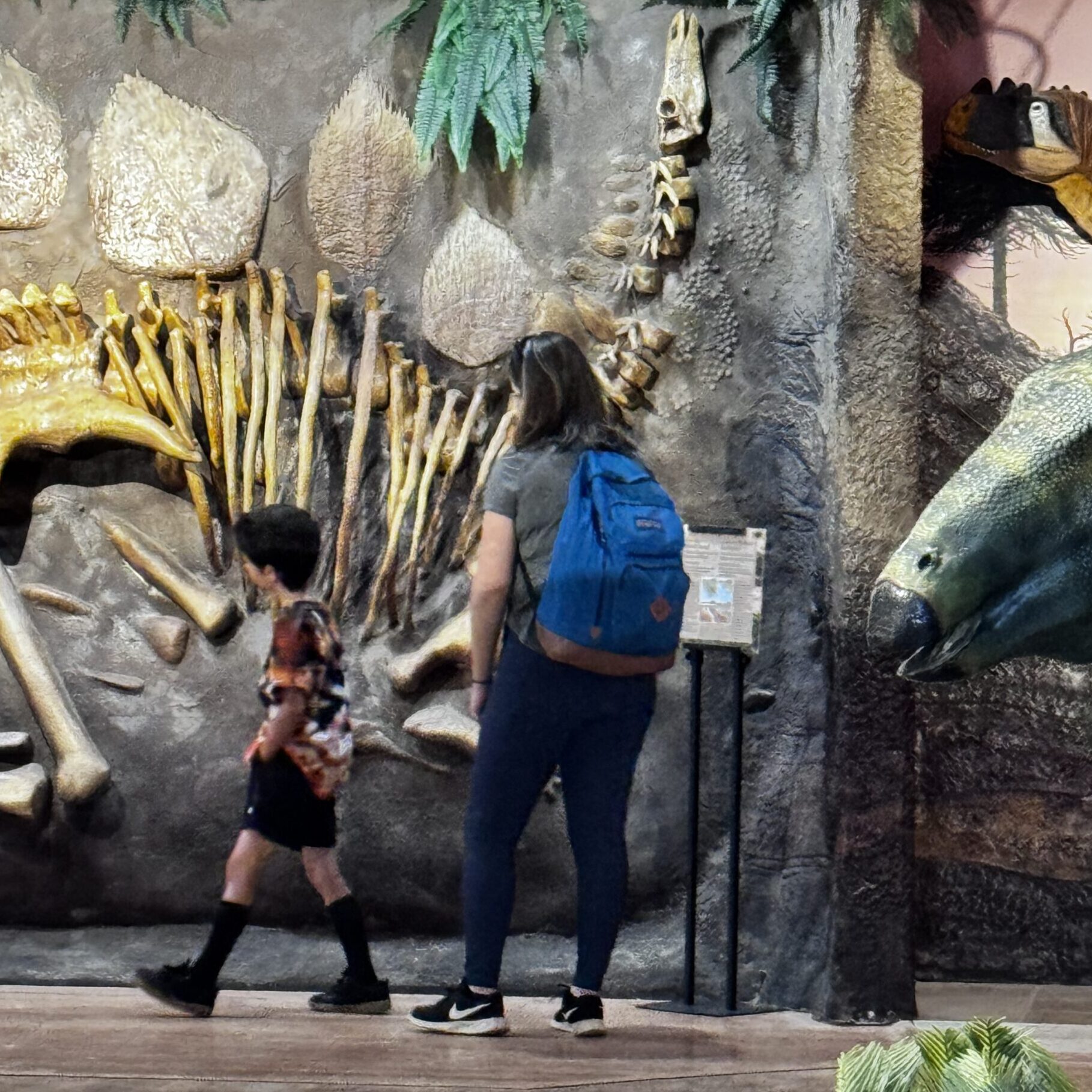
The world’s first Stegosaurus fossils were unearthed on Dinosaur Ridge in 1876. This part of Jurassic Colorado featured meandering stream channels and floodplains that built the Morrison Formation. Layers of sand, silt, and mud preserved fossils for 150 million years. In this zone visitors come face-to-face with Stegosaurus, Colorado’s state fossil. A full-size sub-adult, touchable reconstruction posed next to a Stegosaurus skeleton, letting visitors compare life and fossil side-by-side while realizing the first of these epic creatures was found less than a mile from this very spot!
Meanwhile, a life-sized Ceratosaurus looms nearby, representing one of the rare predators of this ancient ecosystem.
ZONE 3: DINOSAUR RIDGE
Beach Day ~100 MYA
Did you know Colorado once had a coastline? Around 100 million years ago, this region sat at the edge of a vast inland sea. The famous Dinosaur Ridge tracksite preserves this prehistoric shoreline, capturing the Cretaceous moment when dinosaurs walked across tidal flats and left their footprints in soft, wet sand.
This exhibit highlights rare tracks made by deinonychosaurs, raptor-like predators, and horseshoe crabs, offering a glimpse into an ancient interaction between hunter and prey. It also celebrates the science of paleoichnology, the study of fossilized tracks and traces, which helps scientists understand how extinct animals moved, hunted, and behaved. Dinosaur Ridge is internationally known for this field of research, thanks to co-founder and legendary track expert Dr. Martin Lockley, for whom the building is named. This immersive corner of the exhibit will serve as a call to action: head up to the Main Tracksite to see the real fossil footprints that made Dinosaur Ridge world-famous.
ZONE 4: ANCIENT SEAWAY
85 MYA
Welcome to the bottom of the sea! During this time, a warm, shallow ocean split North America in half, and Colorado was underwater. At the top of the food chain swam the mosasaurs, giant marine reptiles that could grow more than 50 feet long! This zone will feature something never seen in a museum: a juvenile Tylosaurus (one of the largest types of mosasaurs) mounted on a motorized ceiling track that allows it to “swim” overhead as if cruising through ancient waters.
ZONE 5: TRICERATOPS TRAIL
66 MYA
By the end of the Age of Dinosaurs, the sea had retreated, and Colorado had transformed into a humid, swampy landscape filled with tall palm trees and dense vegetation. Iconic dinosaurs like Triceratops, T. rex, and Edmontosaurus roamed what is now Golden, leaving behind footprints that are still visible along Triceratops Trail today.
This exhibit zone brings those ancient giants to life with dramatic, immersive displays. A life-sized Triceratops will be bursting through the wall, touchable and up close, while a motion-activated duck-billed dinosaur guards a nest of babies that move as they hatch. A sweeping mural sets the scene with prehistoric flora just as the incoming asteroid that marked the end of the dinosaurs approaches.
ZONE 6: AFTER THE ASTEROID
From Giant Sequoias to the Pleistocene, 34 MYA-40,000 years ago
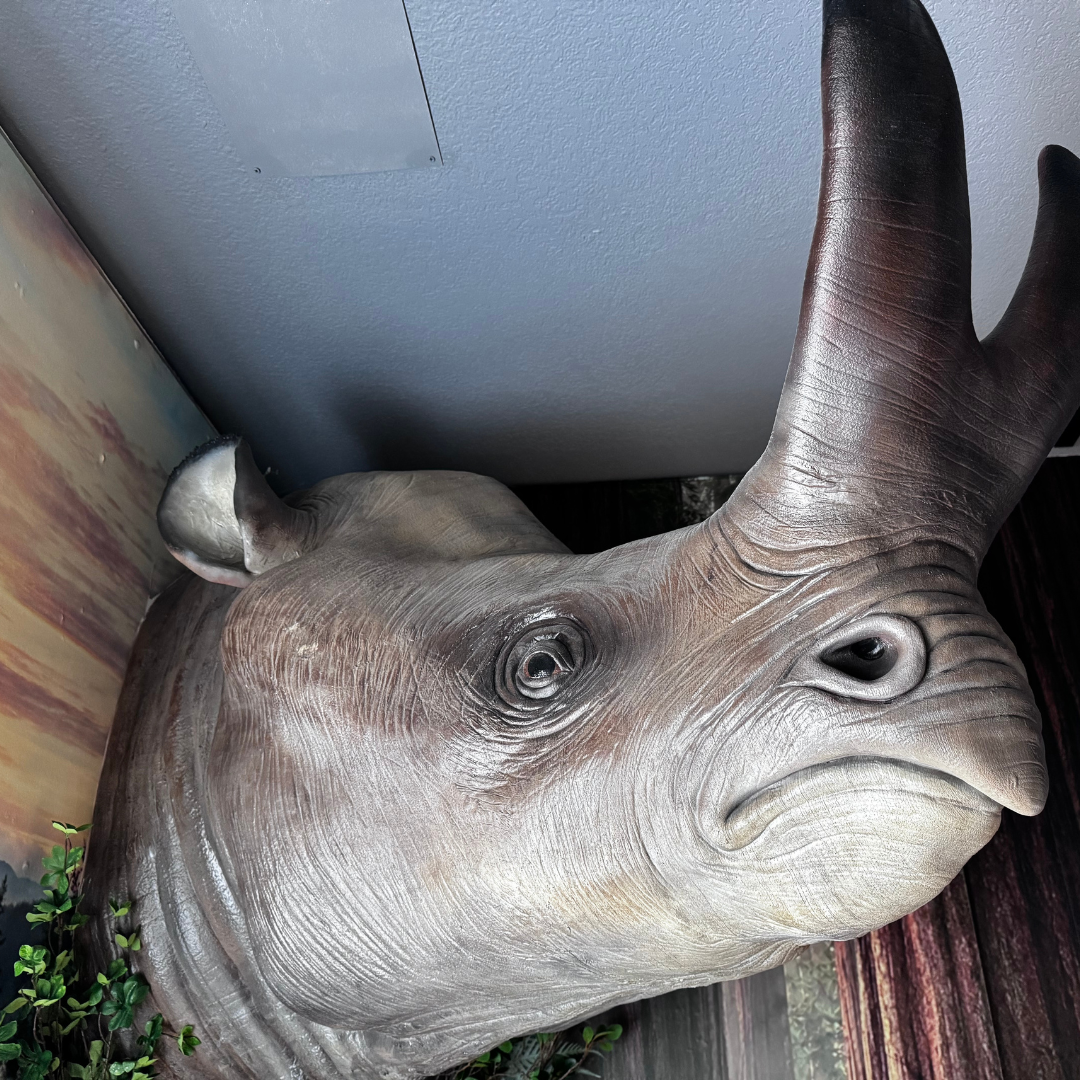
In this final exhibit, the dinosaurs are long gone. Dramatically different life after the asteroid, from giant redwood forests to beasts of the Ice Age, now dominates. Murals transport visitors to the rich paleoecosystems of what is now Colorado’s Florissant National Monument, where ancient sequoias once stood and giant rhino-relatives roamed. A reconstructed Megacerops head overlooking the stump of a massive redwood tree and a moder dog-sized three-toed horse relative called Miohippus will leave visitors imagining a younger, wilder Colorado before heading outdoors again into the beautiful boundaries of Red Rocks Park.

Honoring Legacy and Building Community
This building honors its namesake Dr. Martin G. Lockley’s legacy of making geoscience exciting and accessible. The Deep Time Detour exhibition shares Colorado’s prehistoric story in a way intended to welcome curiosity about the distant past.
As Martin wrote in one of his book dedications, “To all fellow travelers on the eternal trail, especially family, friends, colleagues, students, visitors, and a potential new generation of unruly dinosaur trackers: May the road be smooth and may you see farther down the trail than I ever will.”